
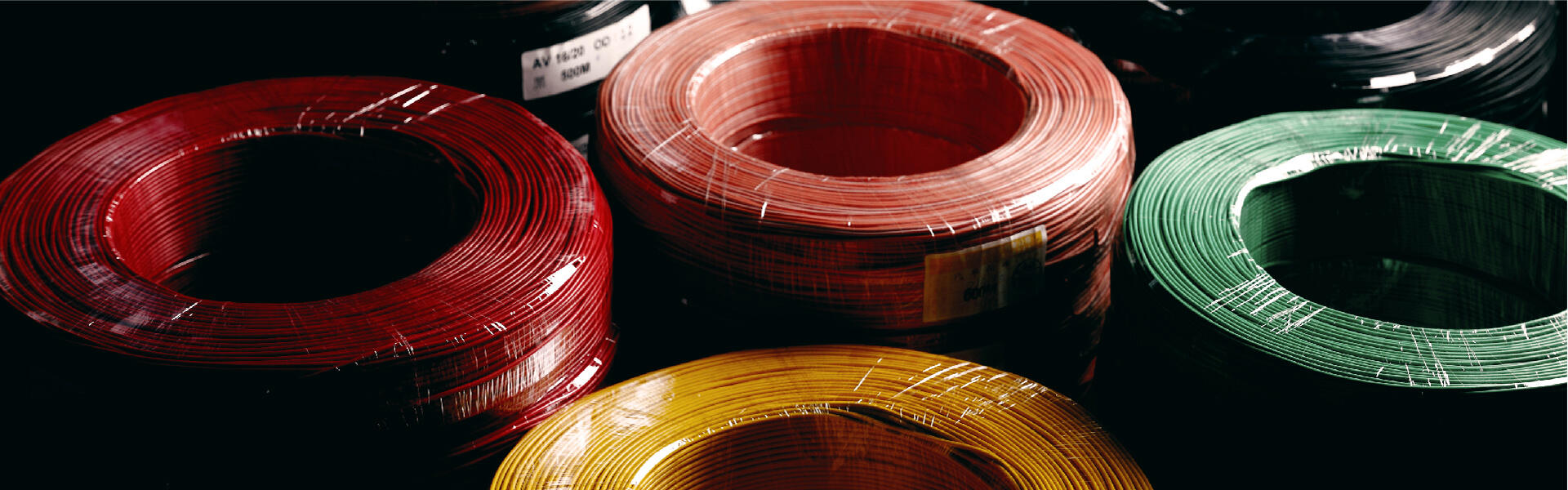
Automotive Wire
汽车电线是车辆电气与讯号传输的关键,广泛应用于传统汽车与电动车。依用途可分为高压电线、美日标准线材(SAE J1128、JASO D611)及国际标准(ISO 6722)。
高压电线 采用矽胶、XLPE 或 ETFE 绝缘,耐热、耐油、耐磨,适用于电动车、电池模组、工业与新能源系统。
全球标准 规范如 SAE J1128 的 GXL/SXL/TXL 线、JASO D611 的 AV/AVS/AVSS 线,以及 ISO 6722 覆盖多种绝缘材质与高达 150°C 的温度等级,确保品质一致与国际认证。

High Voltage Cable
High voltage wire is a specialized insulated conductor designed to handle voltages above 600V, essential for high-power and energy-intensive environments. It is widely used in EV systems, industrial equipment, battery packs, solar energy infrastructure, and energy storage systems (ESS), where electrical and thermal reliability is critical.
These wires feature heat, oil, and abrasion-resistant insulation such as silicone, XLPE, or ETFE, tailored to system needs. They comply with global standards like UL 758, and ISO 6722, ensuring both electrical safety and mechanical durability.
Selecting the right high voltage wire requires evaluating voltage class, temperature rating, conductor type, and insulation thickness. Trusted by manufacturers, OEMs, and engineers, these cables support safe, efficient, and long-lasting systems across transportation, energy, ESS, and automation sectors.
SAE J1128
SAE J1128 is a U.S. automotive wire standard established by the Society of Automotive Engineers (SAE) for low-voltage electrical systems in passenger cars, trucks, and off-road equipment. It specifies construction, performance, and testing requirements for primary wires in 12V and 24V systems.
The standard includes wire types such as GPT, GXL, SXL, and TXL, which vary in insulation thickness and temperature ratings. These wires are widely applied in control circuits, lighting, dashboards, engine compartments, and power distribution throughout vehicles.
Designed for demanding automotive environments, J1128-compliant wires provide abrasion, chemical, and heat resistance with flexibility across operating ranges from -40°C to +125°C. Trusted by OEMs and harness manufacturers worldwide, SAE J1128 ensures reliable, safe, and durable vehicle electrical systems.
JASO D611
JASO D611 is a Japanese automotive standard established by the Society of Automotive Engineers of Japan (JASO). It defines construction, performance, and testing requirements for low-voltage automotive wires, mainly used in 12V and 24V systems. The standard ensures stable and safe operation of electrical wiring in demanding vehicle environments.
The specification covers single-core wires applied in engine compartments, chassis wiring, interior electronics, and lighting systems. It evaluates insulation thickness, conductor resistance, heat resistance, cold flexibility, and chemical durability to guarantee reliability against temperature variations, mechanical stress, and exposure to fluids.
Under JASO D611, common wire types include AV, AVS, AVSS, and CAVUS, which differ in insulation wall thickness and current capacity. These wires are widely adopted by Japanese OEMs and Asian automakers, often referenced alongside ISO 6722 and SAE J1128 as global benchmarks for modern automotive wire harness design.
ISO 6722
ISO 6722 is an international standard developed by the International Organization for Standardization (ISO) that defines requirements for single-core low-voltage cables in automotive electrical systems, mainly for 12V and 24V vehicles. It provides global benchmarks for safety, durability, and performance.
The standard covers copper or tinned copper conductors rated up to 60V DC, with temperature classes from -40°C to +150°C. It allows various insulation materials such as PVC, XLPE, TPE, and ETFE to suit different automotive applications.
ISO 6722 specifies key criteria for wire construction, insulation quality, and electrical reliability, including resistance to heat, abrasion, and aging. Widely adopted by OEMs and harness manufacturers, it underpins common wire types like FLRY, AVSS, and TXL, ensuring dependable use in engine compartments, vehicle bodies, and interior electronics.