
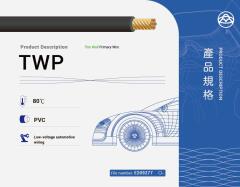
TWP
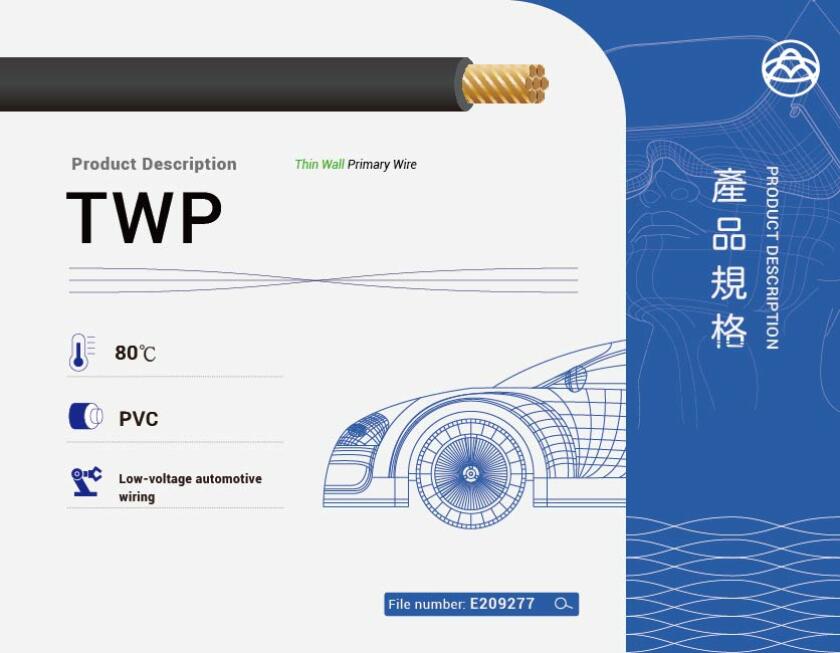
TWP automotive wire with thin-wall PVC insulation, SAE J1128 compliant and rated -40°C to +80°C/60V. Ideal for dashboards, control circuits, and light-duty signal wiring.
TWP Automotive Wire – Thin-Wall PVC Insulated Wire for Low-Voltage Vehicle Applications
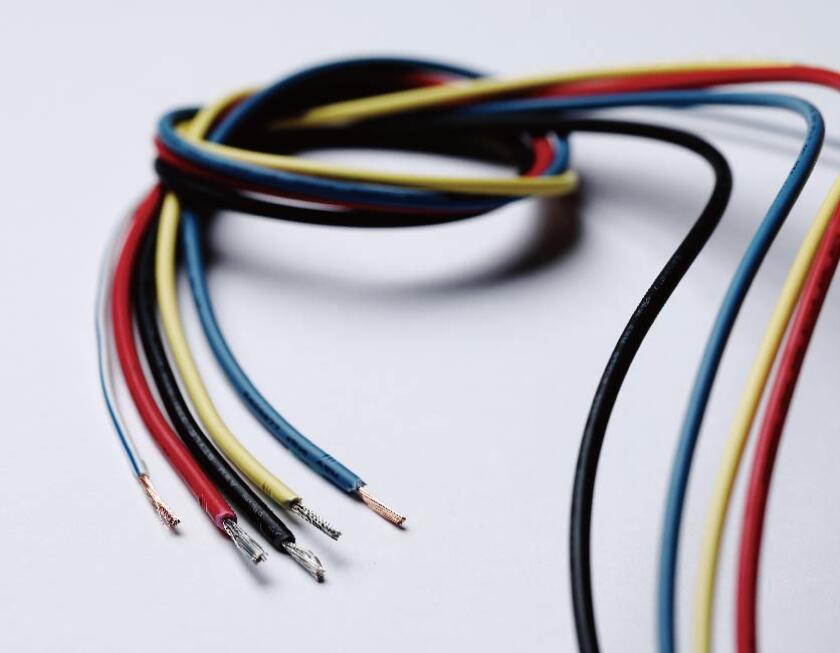
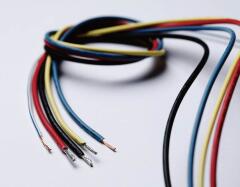
TWP automotive wire is a thin-wall primary wire insulated with polyvinyl chloride (PVC), designed for low-voltage 12V and 24V electrical systems in vehicles. Known for its flexibility and space-saving profile, TWP wire is widely used in automotive dashboards, interior control circuits, and low-current signal routing where lightweight, compact insulation is required.
With a temperature rating of -40°C to +80°C and voltage up to 60V, TWP wire offers sufficient thermal and mechanical performance for light-duty applications. It complies with SAE J1128 standards and is suitable for OEM harness manufacturing and aftermarket repairs.
Key Features
Operating temperature range: -40°C to +80°C
Voltage rating: Up to 60V
Thin-wall PVC insulation for compact harness layouts
Stranded bare copper conductor for flexibility
Complies with SAE J1128 specifications
RoHS compliant
Application
Internal dashboard and control panel wiring
Signal and low-current circuits in passenger cars
Harnesses for light-duty vehicles and trailers
Compact routing within automotive infotainment units
Interior lighting and switch modules
TWP wire offers cost-effective, compact, and flexible performance for low-voltage vehicle wiring needs, especially in space-constrained environments where weight and bend radius matter.
Mechanical and Thermal Properties – SAE J1128 Testing
| SAE Cable Type | Min. Tensile Strength (MPa) | Min. Tensile Strength (psi) | Min. Elongation (%) | Test Temp (°C ±2°C) | Temp Class Rating (°C ±2°C) |
| TWP / GPT / HDT | 11 | 1600 | 125 | 110 | 80 |
| STS / HTS | 7 | 1000 | 150 | 110 | 80 |
| TXL / GXL / SXL | 10 | 1500 | 150 | 155 | 125 |
| TWE / GTE / HTE | 11 | 1600 | 200 | 150 | 120 |
Note: The above accelerated aging temperatures are appropriate for insulating materials currently specified in this standard. Different test conditions may be necessary for other materials.
相关产品

TXL
TXL automotive wire with thin-wall XLPE insulation, rated -40°C to +125°C. Offers heat resistance, flexibility, and durability for wiring harnesses and vehicle power systems.
GXL
GXL automotive wire with XLPE insulation, rated -40°C to +125°C. Provides heat resistance, flexibility, and durability for wiring harnesses, power, and control circuits.
SXL
SXL automotive wire with heavy-wall XLPE insulation, rated -40°C to +125°C. Delivers heat, oil, and abrasion resistance for engine, battery, and heavy-duty vehicle wiring.
GPT
GPT automotive wire with PVC insulation, SAE J1128 compliant and rated -40°C to +80°C. Ideal for dashboards, lighting, control modules, and low-voltage automotive circuits.
HDT
HDT automotive wire with heavy-wall PVC insulation, SAE J1128 compliant and rated -40°C to +80°C/60V. Ideal for batteries, power circuits, and rugged off-road wiring.