
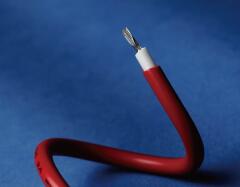
UL11459 mPPE insulation
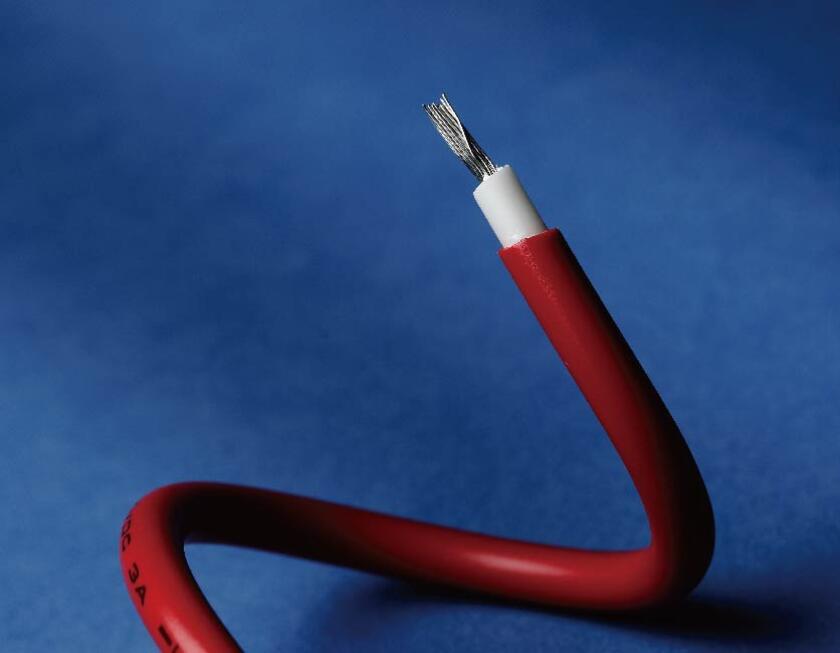
UL11459 hook-up wire with halogen-free mPPE insulation, UL-recognized and rated 80°C/300V. Lightweight, eco-friendly, and reliable for internal wiring in electronic equipment.
UL11459 mPPE Wire – 80°C 300V Internal Single-Conductor Cable
UL11459 hook-up wire is a UL-recognized single-conductor wire designed for internal wiring in electronic and electrical equipment. It features modified polyphenylene ether (mPPE) insulation, offering a lightweight, halogen-free, and environmentally friendly solution. Rated for 80°C and 300V, this wire is ideal for applications requiring reliable performance in dry indoor environments.
Key Features
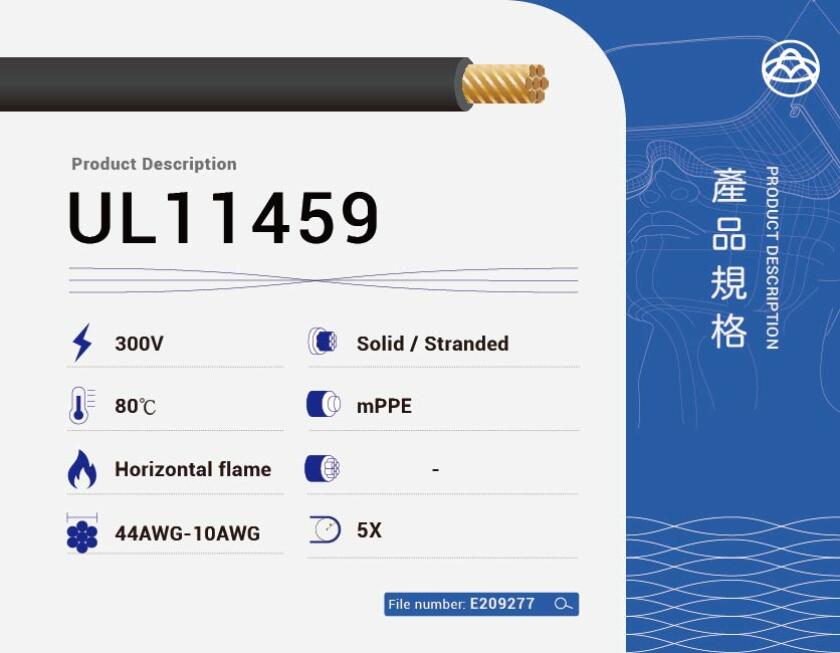
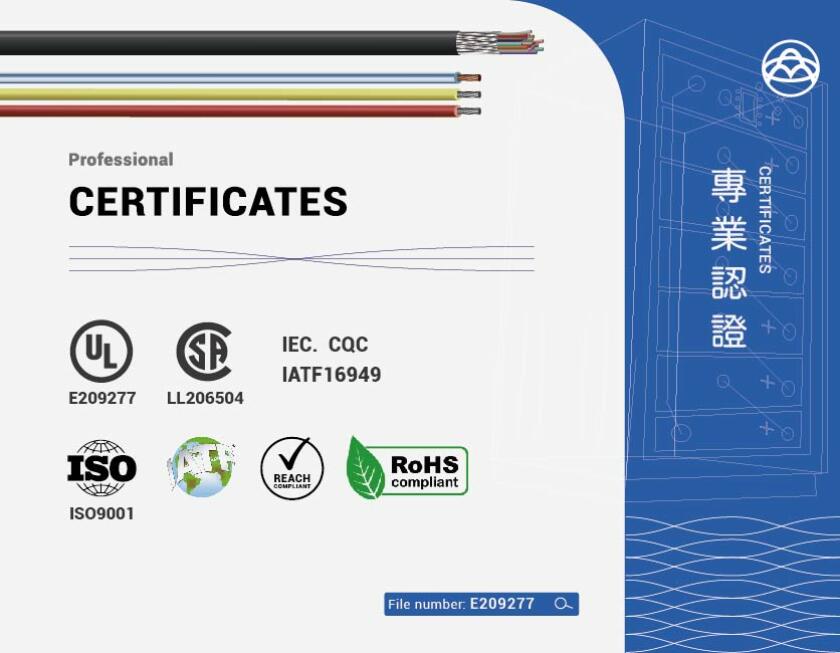
UL-recognized with mPPE insulation
Temperature rating: 80°C
Voltage rating: 300V
Conductor: Stranded tinned copper
Flame resistance: Complies with UL VW-1 horizontal flame test
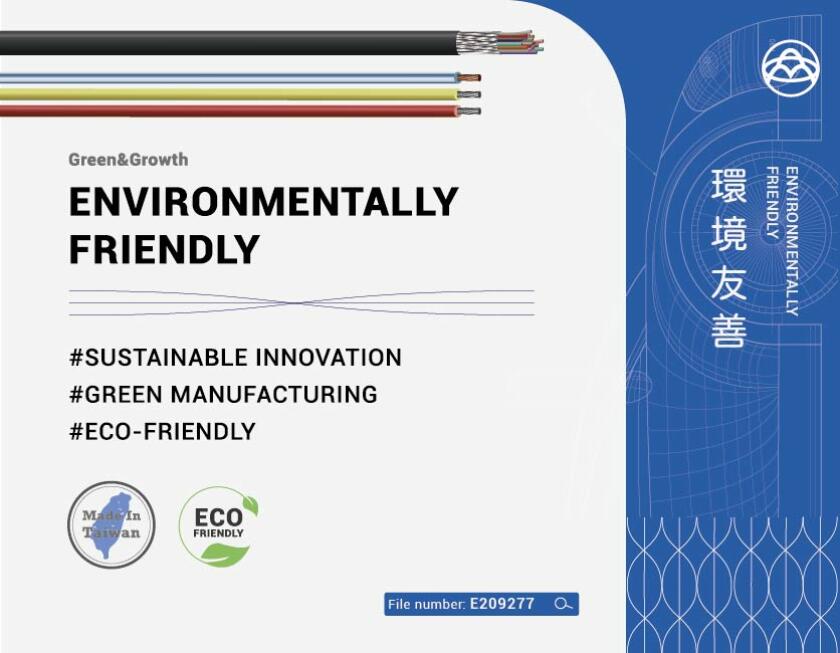
Halogen-free, lightweight, and RoHS-compliant
Suitable for compact internal wiring in dry environments
Applications
Internal wiring of electronic appliances and power control devices
Hook-up wire for industrial automation panels, relay modules, and signal boards
Suitable for dry indoor applications where weight reduction and flame resistance are important
Eco-conscious projects requiring halogen-free and RoHS-compliant wire
UL11459 wire provides a reliable and sustainable solution for internal wiring applications operating at moderate temperatures and low voltages. Its mPPE insulation ensures electrical performance with reduced weight and enhanced safety, meeting international standards.
External Technical References for UL11459
UL Style Page – UL11459 Listing on iq.ul.com
ESG & Sustainability Statement
Wires insulated with modified polyphenylene ether (mPPE) contribute to sustainability goals by reducing overall material usage and environmental impact. As a halogen-free, RoHS and REACH compliant material, mPPE supports environmentally responsible manufacturing while maintaining excellent electrical and mechanical performance.
Using mPPE-insulated wire helps companies align with ESG (Environmental, Social, and Governance) standards by promoting safer materials, reducing hazardous waste, and supporting lightweight, energy-efficient system design. These characteristics are increasingly valued by ESG-focused investors and supply chain partners seeking products that meet high environmental and safety expectations.
相关产品

UL10981 mPPE-PE 绝缘电线
UL10981 配线用电线采用双层 mPPE/PE 绝缘设计,通过 UL 认证,耐温等级为 80°C/300V。具备环保、轻量且可靠的配线特性,适用于各类电子与电气设备应用。
UL11028 mPPE Wire
UL11028 mPPE wire with tinned copper, UL-recognized and rated 105°C/600V. Lightweight, halogen-free, and flame-resistant for power supplies, automation panels, and control units.
UL11457 mPPE Wire
UL11457 hook-up wire with mPPE insulation, UL-recognized and rated 80°C/150V. Provides lightweight, durable, and flame-resistant wiring for control panels, appliances, and machinery.
UL11460 mPPE insulation
UL11460 hook-up wire with halogen-free mPPE insulation, UL-recognized and rated 80°C/300V. Eco-friendly, lightweight, and flame-resistant for appliances, control cabinets, and signal wiring.
UL21458 mPPE insulation
UL21458 mPPE wire is a UL-listed cable designed for internal wiring in electronic and power equipment. Rated 80°C and 300V, it features flame-retardant mPPE insulation and tinned copper conductor construction, offering consistent performance in dry environments.